

Uncategorized
Banking on Safety: Masks Before and After the Covid Era

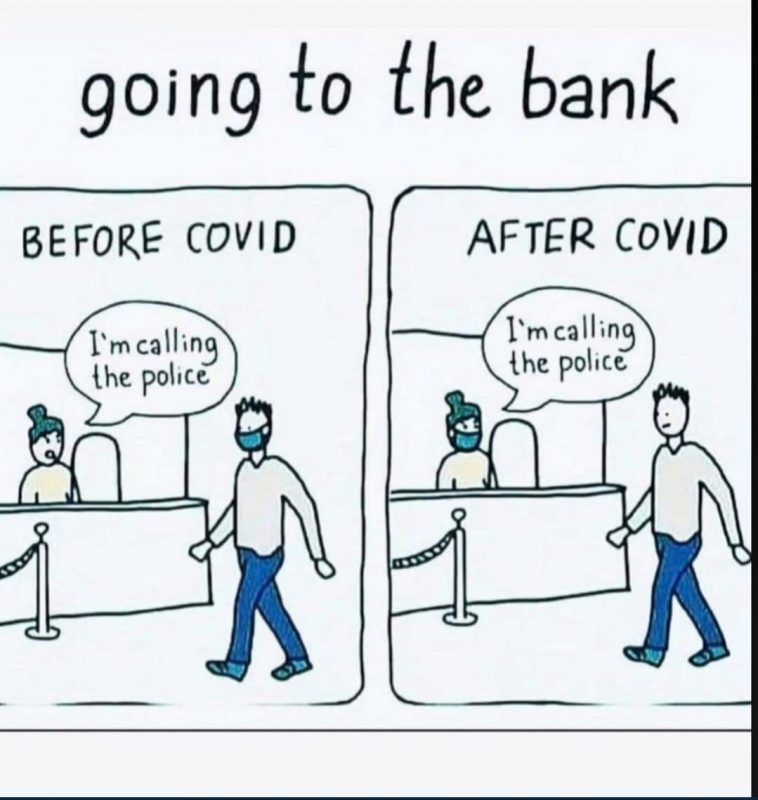
In a world where safety has taken center stage, one accessory has become the unsung hero of our daily lives – the humble face mask. As we navigated the unprecedented challenges ushered in by the Covid-19 era, donning a mask before entering a bank became as crucial as remembering your wallet. But as we cautiously tiptoe towards the post-pandemic landscape, the role of masks in banking seems poised for a transformation. Picture this: before the world was engulfed by the pandemic, walking into a bank masked up might have raised a few eyebrows.
Fast forward to today, and it’s a norm we’ve grown accustomed to. But what does the future hold for our trusty face coverings in the realm of banking? Will they remain a steadfast companion, or will they slowly fade into obscurity? Join us on a journey as we delve into the past, present, and potential future of masks in banking, unraveling the intricate dance between safety, security, and societal norms.
The Evolution of Masks in Banking Pre-Covid
Before the Covid-19 era, masks were a rare sight in banks. The idea of wearing a mask while conducting financial transactions seemed unnecessary and even suspicious to some. Banks were seen as secure spaces, with robust security measures in place to protect both customers and employees. The need for masks simply did not exist.
However, there were instances where masks were used in banking before the pandemic. In certain regions or during specific situations, such as during flu seasons or when dealing with contagious diseases, bank employees might have worn masks as a precautionary measure. These instances were more of an exception rather than the norm.
Additionally, masks were sometimes used by individuals attempting to conceal their identities while engaging in illicit activities. These cases were relatively rare and often associated with criminal behavior rather than safety concerns.
Overall, the use of masks in banking before Covid-19 was minimal and primarily limited to specific circumstances or individuals with ulterior motives.
The Rise of Masks During the Covid-Era
The arrival of the Covid-19 pandemic changed everything. As governments around the world implemented safety regulations and guidelines to curb the spread of the virus, wearing masks became mandatory in many public spaces, including banks.
Banks quickly adapted to this new reality by implementing measures to ensure both staff and customer safety. Plexiglass barriers were installed at teller counters, hand sanitizing stations became ubiquitous, and mask-wearing became a non-negotiable requirement for anyone entering a bank branch.
Customers who had never worn masks before found themselves adjusting to this new norm. Initially met with skepticism or resistance by some individuals, mask-wearing gradually became accepted as an essential part of ensuring everyone’s safety within banking environments.
Safety Regulations and Guidelines for Banks
With the rise of masks in banking, safety regulations and guidelines were put in place to provide a standardized approach across the industry. These regulations aimed to protect both customers and employees, ensuring a safe banking experience for all.
Banks implemented measures such as temperature checks at entrances, social distancing markers, and capacity limits within branches. The use of masks became mandatory for both staff and customers, with clear signage reminding everyone of this requirement.
Regular sanitization of high-touch surfaces became a priority, with increased cleaning schedules to minimize the risk of transmission. Banks also encouraged the use of digital banking services and online transactions to reduce in-person interactions whenever possible.
Technological Innovations in Banking Security
The Covid-19 era accelerated the adoption of technological innovations in banking security. As face-to-face interactions decreased, banks turned to digital solutions to ensure secure transactions while maintaining customer trust.
Biometric authentication methods such as facial recognition technology gained prominence as an alternative to traditional identification methods. This allowed customers to securely access their accounts without physical contact or the need for masks to be removed.
Additionally, banks invested in advanced surveillance systems that could detect individuals wearing masks or other facial coverings. These systems helped identify potential security threats while ensuring compliance with safety regulations.
Customer Perspectives: Comfort vs. Safety
The rise of masks in banking has sparked a debate among customers regarding comfort versus safety. While some individuals embrace mask-wearing as an essential precautionary measure, others find it uncomfortable or inconvenient.
For many customers, wearing a mask can create communication barriers during face-to-face interactions with bank staff. Facial expressions may be harder to read, leading to potential misunderstandings or difficulties in conveying emotions effectively.
However, there is a growing understanding that masks play a crucial role in ensuring the safety and well-being of both customers and employees. As vaccination rates increase and the pandemic subsides, it remains to be seen whether mask-wearing will continue to be a requirement in banking or gradually become optional.
In conclusion, the Covid-19 pandemic brought about a significant shift in the use of masks in banking. From being an uncommon sight before the pandemic, masks have become an integral part of ensuring safety and security within bank branches. Technological innovations have also played a role in enhancing banking security while minimizing physical contact. As we move towards a post-pandemic world, the future of masks in banking remains uncertain. It will ultimately depend on evolving safety regulations, customer preferences, and societal norms.
Kirk Booher, Onguards.